Quanta Costa Plotter?
Challenging The Pricing Of The Plotter Notebook System
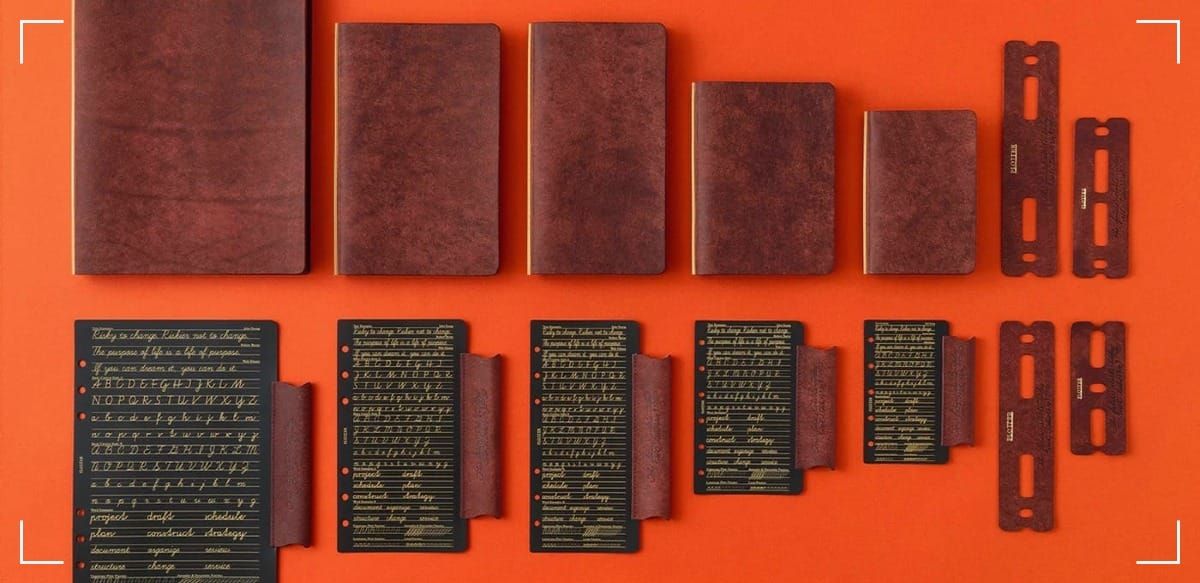
You're standing in front of the shop window, checking the price tags like they're fingerprints. The Plotter's price stares back at you with a calm face and a loud number. A leather cover, small rings, and paper you still have to buy.
It feels simple. It turns out that its simplicity is its main selling point. But how much should simplicity cost? So the question lands hard: are you paying for real materials and real function, or are you paying for heat, scarcity, and a brand story that photographs well, and influencers can blog and YouTube about?
You'll hold Plotter up against the old-timers: Filofax, Traveler's Notebook, Roterfaden, Lochby, and Ro-Biki, just to name a few. You'll also leave with a clean way to judge value without shame, because your tools should earn their keep, not your guilt.
One year review of the Plotter Notebook System.
What you are really buying when you pay Plotter prices
Plotter isn't a planner first, even if the internet keeps dressing it like one. It's a six-ring notebook system built for loose pages and hard decisions. Capture the note. Move it. Refine it. Keep what matters. Dump the rest. That's the pitch, and when you use it as a working inbox, it makes sense.
The binder is minimal on purpose. A leather cover, six rings, and not much else. No built-in pen loop by default. No "starter bundle" that saves you from yourself. Plotter expects you to build your own kit, piece by piece. That freedom is clean, but it also means the register keeps ringing.
Here's what the money usually looks like in the US, based on common listings and recent restocks: leather binders often land roughly in the $96 to $250 range, depending on size and leather, while limited runs and event leathers can climb higher. Refills tend to be the part that doesn't hurt as much, often around $6 to $8 for loose-leaf packs in many sizes, with some diary formats costing more. Stand-alone pads and notebooks sit around $18, and small accessories, including dividers, lifters, and elastic add-ons, often run $6 to $15 each. There is no point in giving European prices, as Pilot's availability is sketchy.
So yes, the sting is front-loaded. The paper won't bankrupt you. The cover can.
Plotter paper also has a reputation for behaving with fountain pens. Users often describe it as close to Midori MD in feel, but a bit thinner. That matters if you write with wet nibs and don't want bleed-through, turning your notes into a crime scene. If you want a broader view of how people mix systems, see the long-running notebook system coverage at The Gentleman Stationer's Notebook Systems hub.
The small rings are a feature, but they also cap your value
Plotter's small rings are part of its personality. Many popular sizes use 11 mm rings with roughly an 80-sheet capacity. That limit pushes a behavior change. You can't hoard pages forever. You prune. You archive. You keep your "carry stack" sharp.
For a working mind, that's a gift. It's the same discipline you use in photography when you edit a contact sheet. You don't frame every shot. You pick the frames that survive daylight.
This is where Plotter can justify itself. If you juggle projects, meetings, client notes, and half-formed ideas, a slim binder forces triage. You capture fast. Then you return later, pull the good pages forward, and file the rest away.
Still, don't romanticize the limit. If you need thick notebooks, Plotter can feel like paying extra for less space. If your life demands a chunky reference book you carry intact, the small rings can become a daily irritation.
If you hate archiving, Plotter won't save you. It will just expose you faster.
Where the price stings: leather, accessory creep, and a bare-bones starter kit
Here's the uncomfortable truth: at the base level, you're buying a simple ring binder wrapped in leather. The leather can be excellent. The finishing can be clean. The design restraint can be real. Yet the object still risks looking like an expensive slab with hardware.
That's why it's fair to challenge the pricing logic. You should. Especially when accessories pile up like lenses you don't use.
Accessory creep is how the system gets you. A penholder here. A lifter there. Divider sets, project pages, elastic bands, specialty rulers. Each item feels "small." Together, they feel like rent.
If you want to stay rational, treat Plotter like you treat a field kit. Start with a body and one lens, then shoot. A practical starter setup looks like this:
- Binder plus refills: enough paper to work for two weeks, not two years.
- A few dividers: only if you already sort by project or topic.
- One lifter with an elastic band or pen loop: useful as a writing board and a quick section marker.
Then stop. Add only when a real pain point shows up.
Does the price make sense next to Filofax, Midori TN, Roterfaden, Lochby, and Ro-Biki
Plotter is premium-priced for a ring binder, especially once you cross into limited leather runs. That premium is easier to swallow if you care about leather aging, a clean build, and a curated refill ecosystem. It's harder to swallow when you realize how much of the function comes from the ring format itself, not the logo.
Below is a plain-language comparison, because pretending every system solves the same problem is how you waste money.
This table frames what you get in the box and what you can do with it.
| System | What you get out of the box | Page shuffling | How you scale it over time | Best fit for |
|---|---|---|---|---|
| Plotter (6-ring) | Minimal binder, accessories separate | Excellent | Add refills and accessories as needed | Project juggling, portable "working stack," fountain pen notes |
| Filofax (6-ring) | Often sold as a more complete organizer | Excellent | Many sizes and ring capacities | Heavy note-takers, budget-sensitive buyers |
| Midori Traveler's Notebook | Cover plus inserts | Limited | Add inserts slowly | Journaling, travel notes, long-form writing in inserts |
| Roterfaden | Cover system with strong modular hold | Medium to good | Add booklets and accessories | People who want rugged, modular, less "planner-coded" gear |
| Lochby | Rugged cover, often zip or folio style | Limited to medium | Add notebooks and refills | Road work, weather, bags that get thrown around |
| Ro-Biki | Bound notebook format | None | Buy a new volume | Writers who want simple, durable, and done |
If you want to read how one person actually rotates several systems in real life, the hybrid approach is described well in a multi-system notebook "system" write-up.
Filofax is the uncomfortable comparison, same idea, often less money
Filofax is the ghost at Plotter's table. Same core concept. Same six-ring logic. And here's the kicker that challenges the premium: Plotter ring spacing is not proprietary. In many sizes, you can run Filofax-compatible inserts and accessories as long as you match the size and hole pattern.
That fact alone forces a hard question. If the holes line up, what are you really buying with Plotter?
You're buying leather feel, design restraint, and a curated menu of easy-to-love refills. You're also buying the discipline of small rings, because many Filofax options offer larger capacities. For some people, that extra capacity is freedom. For others, it's clutter with a zipper. Check the conclusion chapter below, as there is a cheaper Filofax alternative to Plotter.
If you're price-sensitive, Filofax can be the sanity check. It lets you test whether the ring workflow improves your work before you pay premium leather prices. You can also steal the best parts of both worlds, because compatibility keeps the door unlocked.
For a mainstream take on Plotter's flexibility (and why people keep paying anyway), see The Strategist's Plotter review.
Traveler's Notebook and Ro-Biki, different build, different value story
Traveler's Notebook and Ro-Biki are a different animal. It's a cover plus inserts, held by elastic cords. The buy-in can feel easier because you can start with one insert and add more when you earn the need. It's slow spending, not a big hit.
Still, you lose the clean "move this page to the front" behavior that ring systems do so well. You can shuffle inserts. You can't shuffle pages without extra work. That matters if your notes act like active evidence, not a diary.
If you want a closer look at Plotter's smaller sizes and what the system feels like in-hand, Notebook Stories' Mini Plotter review gives you that street-level texture.
A simple test to decide if Plotter is overpriced for you, or perfect
Don't make this a belief system. Make it a test.
Plotter's value depends on one brutal metric: use. If it lives in your bag and takes real notes, the cost spreads out over years. If it sits on a desk like a leather trophy, it becomes a very expensive lie.
Start with a contact sheet style checklist. Fast answers, no poetry.
First, do you need pages that move? If yes, rings matter. If no, don't buy rings.
Next, do you actually review your notes? Plotter's whole philosophy depends on returning to the pages. Capture is easy. Review is the work. If you never review, you'll fill the binder and resent it.
Then, can you live with the slim capacity? Those small rings force a routine: keep only what you need on you, and move old pages to an archive. If you don't want an archive, you'll feel squeezed all the time.
Finally, do you care about fountain pen paper enough to pay for it? If paper feel matters to your daily work, that's a real value factor. If you write with whatever pen is nearby, don't overpay for romance.
Make an archiving plan before you buy. A cheap archive binder at home works. A labeled folder works too. If you're already building a long-term memory system, connect your paper notes to a digital index. The Memex Method mindset fits here, because the point is retrieval under stress, not perfect aesthetics.
The 30-day carry test, if it does not live in your bag, do not buy it
Run the test before you spend the money.
For 30 days, simulate Plotter with a cheaper six-ring cover in the same size. Use similar paper. Carry it the same way you'd carry Plotter. Force the same habits: capture, review, prune.
If you can't keep up with that rhythm, premium leather won't fix you. It will just sit there and judge you.
On the other hand, if you naturally capture notes and you keep returning to them, the premium starts to look less like vanity and more like buying a tool you already proved you'll use.
To see how other people assemble real "ecosystems" instead of one magic notebook, read a 2026 notebook ecosystem field report. It's messy, human, and useful.
Build the cheapest working setup first, then decide if the leather earns its keep
If you still want Plotter after the carry test, build the leanest working kit.
Pick a size based on how you write. A5 gives you room for real sentences and meetings. Pocket sizes are for quick capture and lists. Choose one ruling you can live with. Dot grid often works because it doesn't fight you.
Add one lifter. Stop there.
After two weeks, judge it like a working photographer judges a bag: by what it lets you do under pressure.
Ask yourself four things:
- Do you write more, or just admire the gear?
- Do you find notes faster than before?
- Do you archive pages without resentment?
- Do you produce better work, or cleaner stress?
If the answers are solid, the leather starts earning its keep. If the answers are weak, keep the workflow and drop the premium.
Conclusion, summary, key takeaways, links, download(s)
(Reserved for paying members)