A Simple Analog Index
That Makes Any Notebook Searchable
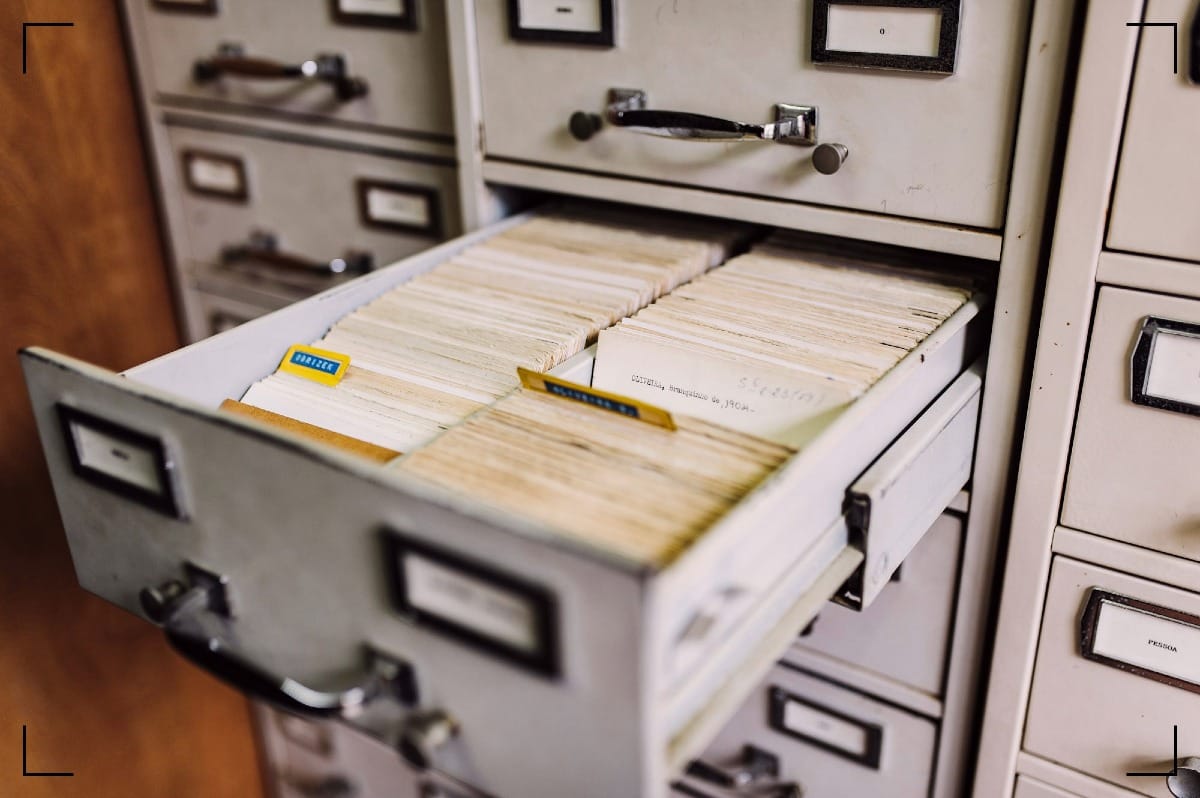
You know that moment. When you're pawing through old pages with no labels. Somewhere in that stack is the information you need, a name, a date, a lens setting, a motel address, a promise you made to yourself at 2 a.m. It's in there. It's just hiding.
The same thing happens with your written notes. While researching commonplace books, I noticed that written notes mostly fail for one reason: retrieval. Capture is easy. Finding is the hard part.
A simple analog index fixes that. Not a fancy template. Not a new system you'll abandon. Just a small habit that turns any notebook into something you can search with your eyes and your finger, fast.
Why do notes go missing when the pressure hits
A notebook feels honest because it's physical. Ink stays put. Pages don't crash. Still, the truth is colder: paper remembers, but it doesn't point.
When you're under a deadline, you don't need "memories." You need coordinates.
If you write in one long stream, everything becomes the same texture. Meetings bleed into gear lists. Street names mix with exposure notes. Six months later, it all looks like weather. And if you carry multiple notebooks, the problem multiplies. Each one becomes a separate alley with no street signs.
Digital search spoiled you. Type a word, pull a thread, watch the answer crawl out. Paper doesn't do that. The paper asks you to be your own search engine.
That's where notebook indexing earns its keep. You're not trying to make the notebook pretty. You're trying to make it useful later, when your memory turns unreliable, and your inbox can't save you.
If you've ever watched a team hunt through email chains for a single fact, you already know the punchline. The answer is usually somewhere else. Somewhere quieter. Somewhere, you wrote it down when it mattered.
The library mindset applies: capture first, then label so you can return without panic. This pairs well with a system like https://www.yonkeydonkey.blog/bookmark-organization-library/ because both are about turning piles into shelves.
A notebook without an index is a drawer. An indexed notebook is a file.
The two-page analog index that makes any notebook searchable
You don't need a special notebook. Some brands include an index page, and some don't. Either way, you can build your own in two minutes.
Pick your spot:
- Pocket notebooks: use the last two pages.
- Larger notebooks: use the first two pages, or the last two if you prefer.
Then do three things, and do them every time.
Set up the bones once
Number your pages. A pencil is fine. Small numbers, bottom corner, nothing precious.
Next, date the notebook. Write the start date on the inside cover. When you finish, add the end date. That date range becomes your timestamp when you're digging through old work.
Finally, reserve the index pages. Write "INDEX" at the top. Leave the rest blank.
That's it. No rules about how you take notes. No required format. The index isn't there to police you. It's there to find you later.
Add entries as you go, not after you "catch up"
Each time you start a new topic, you might need to add one line to the index. Topic on the left. Page number(s) on the right.
Keep it rough. Keep it honest. You can tighten it later if the topic comes up again.
Here's a compact entry style that stays readable under stress:
| Index entry type | What you write | Example |
|---|---|---|
| Single page | Topic + page | Client call notes, 14 |
| Page range | Topic + range | Lightroom export workflow, 22-24 |
| Repeating topic | Topic + scattered pages | Trip receipts, 7, 19, 31 |
After a week, you'll notice something. The index becomes a spotlight. It tells you what you actually do, not what you claim you do.
Don't index everything. The index is what the future you will curse you for losing.
Keeping your index alive across trips, projects, and backups
Indexing gets interesting when you live out of a bag. Dust, rain, cramped seats, and that thin hotel light that makes everything feel like a confession. Your notebook takes hits. So does your attention.
Two rules keep notebook indexing from dying on the road.
First, use fewer notebooks at once. One pocket book for capture, one larger book for the heavy stuff, if you must. The more you split, the more you search.
Second, build a tiny "master index" outside the notebook stack. One page in a separate log, or a single text file. Each finished notebook gets one line:
- Notebook ID (A, B, C, or 2026-01)
- Date range
- 5 to 10 key topics with page numbers
This is where analog and digital shake hands in the dark. You can keep the master index in plain text so it won't lock you into an app that disappears. Keep it boring. Boring survives.
If you want a broader way to think about personal indexing across mediums, this fits neatly beside https://www.yonkeydonkey.blog/the-memex-method/. The idea is simple: make your notes linkable, not just stored.
Back up the index like it's evidence
You don't need to scan entire notebooks to get value. Start smaller.
When you finish a notebook, take a clear photo of the index pages. Save it with a date-first filename so it sorts and searches cleanly later. If you already follow a consistent scan naming pattern, you're ahead of most people. If not, steal a reliable convention from https://www.yonkeydonkey.blog/scanned-documents-naming-system/ and apply it to index photos too.
One folder. One rule. You can find it years later.
The quiet payoff
Months from now, you'll need a detail. A witness name, a location, a camera setting, and the hotel that charged you twice. You won't search emails. You won't scroll chats until your eyes burn.
You'll open the notebook, flip to the index, and land on the page in seconds.
That's control.
Conclusion, Summary, Key Takeaways, Links
Paid members only