The Intended Use of the Plotter Notebook System
And why it stays slim on purpose
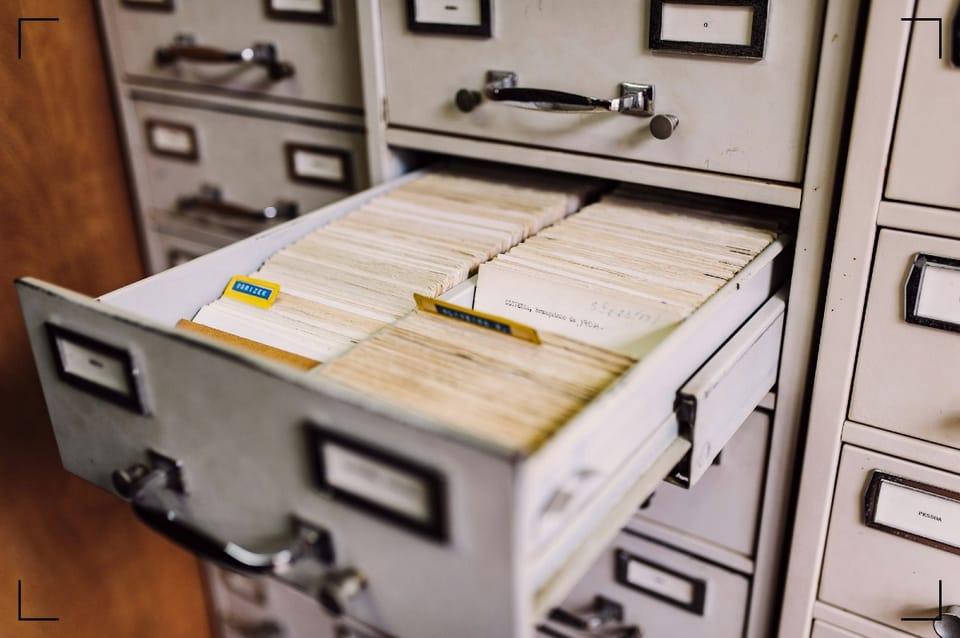
You know the feeling. Archive boxes full of notebooks, a dim bulb hardly illuminating the room, and dust that has been collecting for ages. You hold each notebook up to the light and decide quickly: Keep. Toss. File. Because if you don't, the whole archive turns into a landfill.
That's the plotter notebook system in plain terms. It's meant to help you catch notes before they fade, keep only the pages that still have heat, then push the rest into storage. Yes, you can run it like a planner. Still, that's not the main point. The point is a loop: capture, refine, clear out.
How to use Plotter schedule refills
If you're a writer or a fountain-pen user, you already know the problem. Ideas show up at bad times. Ink dries. Projects sprawl. Meanwhile, your digital life keeps piling up like untagged files. You need a place where thoughts can land, without turning into a permanent mess.
What's Plotter about?
Plotter is built around a three-step rhythm that feels a lot like a photo workflow: ingest, edit, archive. First, you capture fast. Then you develop the page inside a slim binder, moving sheets until the story looks right. Finally, you review and either archive the page or let it go.
That last part matters. Plotter is not designed to hold your life story in one fat brick. The small ring capacity and thin profile push you to curate. It's a feature, not a flaw.
The Plotter stays close to your hands because it's light enough to carry. If you want a binder that can store years of meeting notes, you either buy something else or build an archive outside your daily kit.
Plotter's purpose fits a certain kind of mind, especially if you juggle too much:
- writing and research notes
- project thinking and rough outlines
- lists, light planning, and reference pages
- pen tests, ink logs, and paper experiments
If you want Plotter's own framing for flexible use across planning and journaling, see Plotter's explanation of the system's roles. Read it like a mission statement, then bring it back down to earth.
Use it like a creative inbox for ideas you do not want to lose
A creative inbox is simple. You dump the thought where it won't die. Later, you decide where it belongs.
That "later" is the difference between chaos and a body of work.
In practice, your Plotter can hold:
- Story seeds you scribble in line at the pharmacy.
- An essay outline with arrows and crossed-out lies.
- A quote you don't trust yet, but you don't want to forget.
- A reading list that follows you across airports.
- A pen and ink test page, because you need proof.
Writers like it because it lets you keep fragments loose until they earn a home. Fountain-pen users like it because good paper makes you write more, and writing more makes you think better.
If you want a broader philosophy for building "trails" between ideas, the kind that feels like pinning prints to a wall, you'll like the Memex-inspired approach. Plotter can act as the analog intake for that same habit.
The slim binder is supposed to limit you
The binder stays thin on purpose. Plotter's smaller rings keep you from stuffing it with dead pages. That constraint forces decisions, and decisions are what separate a notebook from a landfill.
You've seen the other way. A big notebook that becomes a graveyard. Months of notes. Years of "maybe." You never reread most of it. The useful pages get buried under noise.
Plotter tries to stop that from happening.
A good rule of thumb is brutal but fair: if you haven't touched a section in 30 to 60 days, it's a candidate for archiving. Not because it's worthless. Because it shouldn't ride in your pocket like a ghost.
If your binder feels "too small," it's often your cue to move pages out, not to force more in.
That's also why Plotter works well when you live in multiple projects. You keep the active pages close. You clear the rest. Your head stays quieter.
How Plotter is designed to support paper, binder, refills, and archiving
Plotter's design choices look expensive and minimal, because they are. Still, they're not random. The system relies on three things working together: the paper you want to write on, a slim binder, and a habit of archiving.
You'll notice the paper first if you use fountain pens. People often describe it as smooth and ink-friendly, and it gets compared to a thinner Midori MD feel. That matters when you write fast, because scratchy paper or feathering ink breaks your rhythm.
You'll notice the binder next. It's a ring system, sold in sizes that match how you carry and write. Common sizes in the US include A5, Bible, Narrow, Mini, and Mini 5. The point is choice by behavior, not status. The Plotter's "Bible" format corresponds to Filofax's "Personal" size. The ringholes match.
Finally, you'll notice the refills. Some come as loose sheets. Others come as bound pads or notebooks. That detail changes everything, because it lets you write like you always do, then organize only what deserves to stay.
For a practical walkthrough from a long-time user, see this Plotter binder walkthrough. It's helpful when you're trying to picture real pages in motion.
Bound pads plus removable pages mean you can write first and organize later
A lot of systems want you to "set up" before you do anything. Plotter doesn't have to. You can write in a bound refill pad like a normal notebook. No rings to open. No page shuffling while your thought is still warm.
Later, when you're calm, you tear out the page you want to keep and add it to the binder.
That flow matters for writers. It keeps friction low when you're capturing a line, a scene, or a list of images you need to shoot. It also matters for fountain-pen users, because you stay in that quiet trance where the nib glides and you stop second-guessing.
This is the analog version of a good ingest routine. In photography, you don't keyword every frame in the field. You get the files safe first. You sort later. Plotter bakes that same idea into paper.
Archiving is not optional; it is part of the system
Plotter expects you to offload pages. You're meant to keep your daily-carry binder lean, then move older material into an archive binder or storage method.
If you skip that step, the system loses its point. The binder bloats. You stop carrying it. The loop breaks.
A simple routine works, even if your weeks get ugly:
- Monthly review: flip through every section, fast and honest.
- Pull pages by project: keep only those worth keeping.
- Label and store: archive by project, date, or client.
- Recycle the rest: dead pages don't deserve rent in your bag.
This is also where you can keep costs under control. Ring spacing in these systems is often compatible across brands in the same size class, so you can punch your own paper or mix in refills from other six-ring ecosystems. In other words, the binder can be premium, while your paper choices stay flexible.
If you like the broader "curious mind" vibe that treats note-taking like a lifelong practice, you'll feel at home with the blog's digital Midori notebook journey. The tools change, but the habit stays.
Plotter vs other notebook systems
and
Ignore the hype and look at intent. You're choosing a mechanism for three acts: capture, rearrange, and carry. Everything else is decoration.
Here's a quick comparison that focuses on what changes your day-to-day.
| System | Best for | Where it bites you |
|---|---|---|
| Plotter | Rearranging pages, keeping a slim "working set" | Requires archiving habits, limited capacity |
| Filofax | Traditional organizer use, lots of planner inserts | Can get bulky, paper varies by refill |
| Roterfaden | Rugged carry, multi-notebook portfolio feel | Heavier, less about page-by-page ring sorting |
| Ro-Biki | Compact binder vibe, Japanese-style form factor | Ecosystem and availability vary by model |
| Midori Traveler's Notebook | Multiple inserts for travel journaling and modes | Pages don't rearrange easily |
| Lochby | Pocket capture, notebook-wallet carry | Less focused on reorganizing loose pages |
Takeaway: Plotter shines when your main need is moving pages while keeping the binder thin. If you want fixed inserts or separate booklets, other systems can feel more natural.
If you want movable pages, compare Plotter with Filofax, Roterfaden, and Ro-Biki
Plotter stays narrow on purpose. It pushes curation. You keep today's pages, not last year's.
Filofax leans more "organizer-first." It often offers more capacity and lots of insert layouts, which helps if you want a classic planner build. The tradeoff is bulk, plus paper quality depends on which refills you choose. Tomoe River paper inserts for Filofax can be found here.
Roterfaden feels like something built to survive a long road. It's more of a tough portfolio than a ring system. You can carry multiple notebooks and tools, but it won't feel as "page-shuffle friendly" as rings. It strongest selling point is compatibility with any A5 format notebook.
Ro-Biki sits closer to compact Japanese binder culture. It can scratch the same itch as Plotter's form factor. Still, you're buying into a different availability and refill world, so it pays to check what you can replace easily. Ro-Biki looks like the Traveller's Notebook's older brother. Ro-Biki size fits in a Traveller's Notebook cover, not the other way around.
If you want an outside perspective on what makes Plotter feel "custom," even to planner users, you can read The Strategist's Plotter take. Keep your guard up, but it's useful context.
If you want multiple thin notebooks, compare Plotter with the Midori Traveler's Notebook and Lochby
The Traveler's Notebook is built around inserts held by elastic. It's excellent for travel, because you can separate modes: journal in one booklet, sketches in another, planning in a third. The catch is that you can't rearrange pages with the same ease as loose-leaf.
Lochby often plays the "carry and capture" role. It's good when you want a notebook-wallet vibe, storage pockets, and quick access. However, it doesn't center on reorganizing individual pages the way Plotter does.
So the intent line looks like this: Plotter is for rearranging and refining pages, Traveler's Notebook is for swapping inserts, and Lochby is for fast capture and carry.
For fountain-pen performance and paper behavior, a review like Fountain Pen Love's Plotter notes can help you set expectations, especially if you write with wetter nibs.
Conclusion, summary, key takeaway, links
(Paying members only)