What Belongs in Your Agenda
And What Doesn't.
You open the agenda, and it looks like a crime scene. Crossed-out chores. Half-dead abbreviations. Tasks dragged from Tuesday to Friday like bad debt. Then, buried in the rubble, the one thing that mattered, the call, the pickup, the payment, the train.
That mess has a name: GTD overload. It happens when you stuff one dated page with everything your brain spits out. The fix isn't a prettier planner. It's a harder rule.
If you like paper, keep it. Paper still beats a screen for thinking, choosing, and seeing the shape of a week. But fixed appointments, alerts, and shared schedules often live better in digital tools. First, you need to know what deserves agenda space.
The Real Job of an Agenda
An agenda is not a diary of your existence. It's not a landfill for every thought, chore, or vague ambition that wanders through your skull before coffee.
Its job is simpler. It holds time-sensitive commitments, visible priorities, and tasks that will slip if they don't get a written home.

Your capture notebook does a different job. So does your project list. So does the scrap paper full of arrows and muttered lies. If you force all of that into one dated system, you get friction, visual noise, and a special kind of planner guilt that serves nobody.
An Agenda Is Not Your Whole Life
You know the habits. Rewriting unfinished tasks for days. Hiding real deadlines inside pages full of filler. Logging obvious routines so the page looks busy. Using abbreviations that made sense at 6:10 (a.m.) and look like ransom-note code by 21:00 (9 p.m.).
A clean split helps. The GTD paper organizer guide separates notes, calendar, next actions, and project support for a reason. Different kinds of information age differently.
Here's the blunt rule:
If missing a todo or appointment changes nothing, it probably doesn't belong in your agenda.
The First Filter
What Must Go in Your Agenda
Cleaner planning beats fuller planning. Every time.
Appointments, Deadlines, and the Ugly Price of Missing Them
Put fixed-time commitments in your agenda. Medical visits, calls, meetings, interviews, flights, school events, dinner reservations, pickup times, train departures. If it has a date and an hour, it goes in.
Deadlines go in, too. Bills. Renewals. Return windows. Tax filings. Manuscript edits due Friday. An invoice that must leave before the month-end. A deadline needs to stare back at you before it becomes a small fire in the kitchen.
Then there are tasks with consequences. Trash night is the classic one. Miss it, and a five-minute chore turns into a barrel of stink, regret, and flies by Saturday. Same logic for medication, sending a payment, bringing a form to an appointment, or picking up a prescription before the pharmacy closes.
Dependencies and Other People Counting on You
Some tasks matter because something else hangs from them. Print the documents before the 8 a.m. appointment. Pack gear before the shoot. Call the contractor before the repair date. Charge camera batteries before the train, not on the platform like a gambler with bad odds.
Other tasks belong because the miss doesn't stay private. Childcare handoff. Dinner you promised to make. Notes for a team meeting. Follow-up material a client expects. Shared duties in a house work the same way. If you drop them, somebody else gets the mess.
David Allen's idea of Agendas for people and meetings helps here. Not every task needs a time slot, but anything tied to a person, meeting, or visible commitment needs a clear place to wait.
The Second Filter
What Usually Does Not Need to Go in Your Agenda
Routine is not the same thing as commitment. A lot of planner clutter comes from confusing those two.
Basic Maintenance and Harmless Filler
Waking up. Brushing your teeth. Showering. Getting dressed. Making coffee. Eating lunch. Most of the time, those don't need dated agenda space. You're going to do them anyway, and if you don't, the problem isn't planning.
The same goes for low-stakes filler. Tidy desk. Refill pen case. Reorganize bookshelf. Read something. Clean downloads folder. These can live on a running list, or nowhere at all.
If you track routines for health, recovery, care work, or habit-building, that changes the story. Then you're logging or supporting a fragile routine. That's valid. It's also different from planning.
Vague Intentions, Loose Notes, and the Gray Zone
"Work on project." "Catch up." "Fix life." "Errands maybe." Those entries look serious. They're fog with handwriting. Replace them with a next action, or move them to a project page.
Raw notes belong elsewhere, too. Brain dumps, meeting notes, research snippets, quotes, sketches, ink tests, story seeds. A separate capture notebook or movable-page system keeps the rough stuff alive without choking your daily page. If you like rings for that, the Plotter notebook as creative inbox makes sense because you can move active pages forward and archive the dead ones.
The gray zone depends on context. Habits go in when you're building them or when missing them hits your health. Chores go in when they happen on a fixed day or when missing them leads to fees, conflict, or mold. Creative work goes in when you assign real work blocks, face a deadline, or owe output to someone else.
Recurring tasks are where paper starts to sweat. Rewriting the same task every week turns a clean planner into a copyist's punishment. That's why people overloaded by big systems often do better when they trim lists early, as Getting Things Done notes about long lists. Recurring items and reminders often belong in digital. Weekly review and selection still belong on paper.
A Simple Rule You Can Actually Use
You don't need a philosophy degree. You need a filter.
The Four-Part Agenda Test
Ask four questions:
- Does skipping this create a real consequence?
- Does it happen at a set time or by a set date?
- Does something else depend on it?
- Is another person counting on it?
One yes may be enough. Two yeses means it clearly belongs.
The Exclusion Test
If you'll probably handle it later and nothing breaks, it probably doesn't need agenda space.
Not every thought deserves a timestamp.
Where the Rest of the Stuff Should Live
Removing items from your agenda doesn't mean losing them. It means giving them a proper address.
Capture, Projects, Checklists
Use a capture notebook for raw input. Jot ideas, errands, reminders, questions, and strange little sparks as they show up. Then process that notebook once a day. Pull true dates into the agenda. Move next actions to a task list. Mark processed notes with a slash, check, or symbol. Date your notes too, because future-you needs breadcrumbs, not riddles.
Use project lists for multi-step work. Keep next actions, waiting items, and support notes there, not jammed into Tuesday. Movable-page systems help because you can cull, reorder, and keep live notes near the front. A ring binder, disc-bound book, or digital task manager all work.
Use checklists for repeatable work. Packing lists. weekly resets. publishing steps. travel kit checks. pen-cleaning routines. You shouldn't rewrite the same choreography from scratch every week.
Use Digital Where Paper Struggles
By 2026, a lot of people will be settling into lighter hybrid setups. One-page paper views for focus. Phone alerts for anything that repeats, shifts, or involves other people. That's not surrender. That's choosing the right fight.
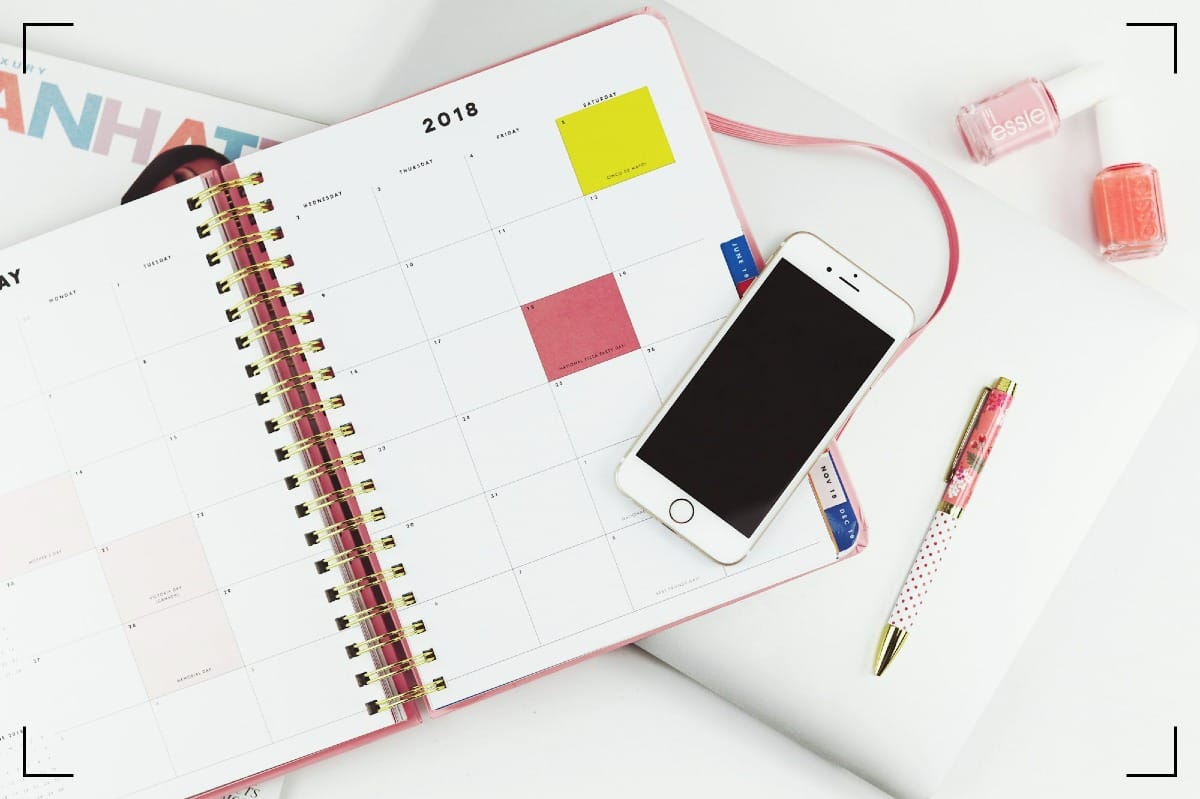
Paper wins when you need attention and perspective. Digital wins with recurring events, alerts, fast rescheduling, shared calendars, search, and archive. Hybrid often wins the week: a pocket notebook for capture, a paper agenda for daily focus, and digital for fixed appointments and repeating tasks.
A Practical Method for Deciding What Goes In
Low friction first. Sorting later.
Capture First, Process Daily, Review Weekly
Write everything down somewhere fast. Don't stop to classify it in the moment. That's how ideas die and clutter multiplies.
At day's end, process once. Pull dates, deadlines, reminders, and must-do tasks into the agenda. Move next actions without a set time to a task list. Put multi-step work on a project page. Keep repeatables on checklists. Archive or toss the rest.
Then review weekly. Move forward only with what still matters. Cut dead weight. If a task keeps getting pushed back, the truth is usually ugly: it's vague, mistimed, or not important.
This quick contrast makes the rule easier to trust:
| Goes in the agenda | Stays out of the agenda |
|---|---|
| 10 a.m. client call, invoice due Friday, pack samples before shoot | Be creative, clean downloads folder, think about future ideas |
| Trash Thursday night, pay rent, parent-teacher meeting, pick up prescription | Maybe vacuum someday, organize pantry if inspired |
| Train time for a pen show, draft submission date, film pickup at 4 p.m. | Test five inks for fun, rearrange notebook shelf |
Common Mistakes, Objections, and Quick FAQs
Writing down tasks with no stakes creates fake busyness. Rewriting unfinished tasks forever burns time and breeds guilt. Cryptic abbreviations rot fast. "PTP frm TK" might have meant something once. Now it looks like a minor stroke on paper.
Keeping everything in one book without a review habit is another trap. A capture notebook you never process becomes another pile. Daily pages without migration rules become a graveyard. Give yourself a short end-of-day scan and a weekly review. That's enough.
Maybe you forget simple tasks unless you write them down? Fine. Use a routine checklist or habit tracker. That's scaffolding, not failure. Maybe you love detailed daily planning? Fine again, but separate planning from logging. Time-block real work, real travel, real constraints. Don't schedule every breath unless you enjoy resenting your own notebook.
If you use only paper, recurring task pages, tickler files, monthly master lists, and a tough weekly review can carry a lot of weight. If you use only digital, remember the same rule still applies. Junk in a calendar is still junk; it just glows.
Your agenda is not a guilt machine. It's a tool for memory, commitment, and attention.
A planner, an agenda, and a to-do list overlap, but they aren't twins. The agenda holds time and consequence. The to-do list holds next actions. The planner is often the larger container that carries both.
Your agenda works best when it carries weight, not clutter. If something has a time, a consequence, a dependency, or a witness, put it on the page.
Then give that page some air. Otherwise, the things that matter will suffocate under all the noise.
Conclusion, summary, key takeaways, links, download(s)
(Reserved for paying members)