Bock vs Schmidt vs JoWo Nibs
A Practical Comparison.
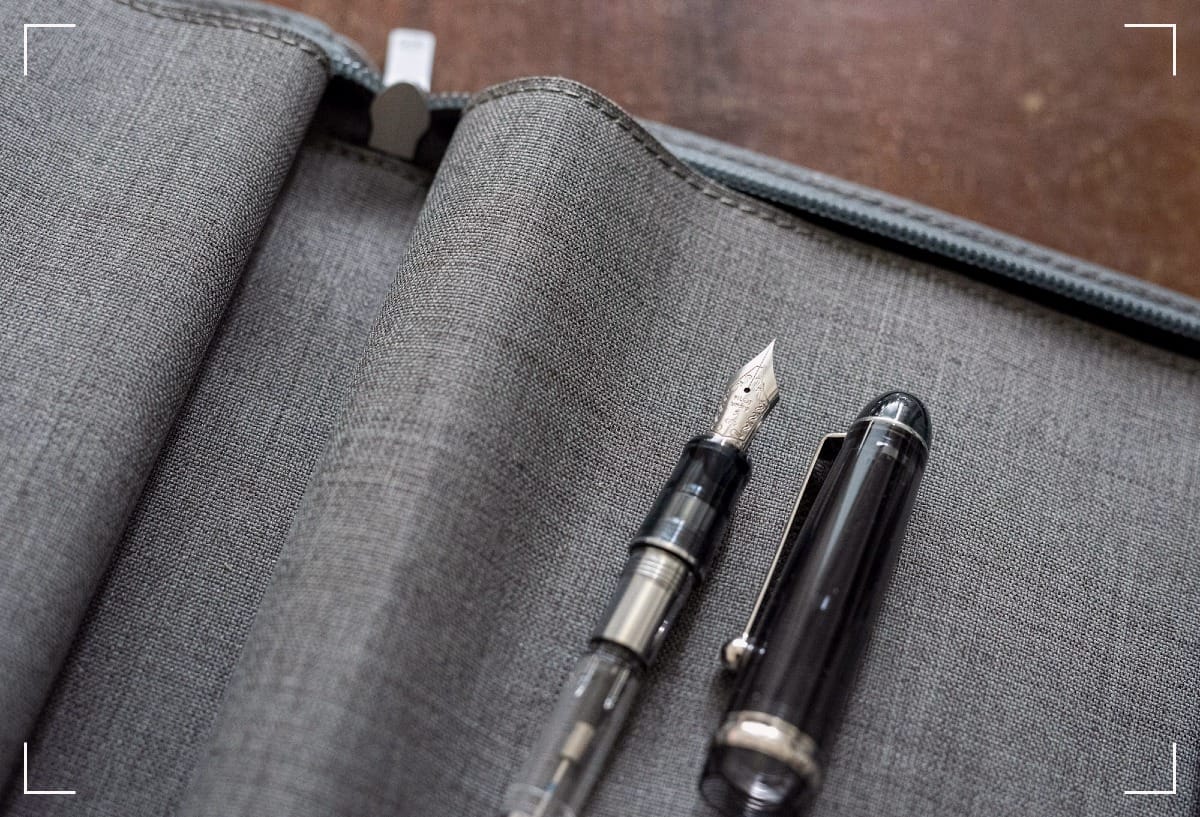
Most pen brands don't make their own nibs. They buy them from specialists, just as a good coat gets its buttons elsewhere. You can ignore that fact until you can't. Until a nib feels wrong. Until you want a swap. Until you're staring at a replacement unit at 2 a.m., wondering why two "#6" nibs don't fit the same.
Three names keep showing up in that late-night search history: Bock, Schmidt, and JoWo. You hear them when you chase a certain feel, you hear them when you buy a pen made in batches, and you hear them when you try to keep a favorite writer alive with a new point.
This is a simple, practical comparison. Materials, build quality, writing feel, wetness, and real-world compatibility. No myths. No promises you can't cash. Because a hard truth sits under all of it: tuning and the feed shape the result as much as the nib maker does. You're comparing common traits, not fate.
Meet the three big suppliers
What they make, and what they're known for
Nib makers are the quiet tradespeople behind the curtain. They build to spec, hit tolerances, ship parts, and move on. The brand sells the story, but the nib is what touches your day.
All three companies act like industrial shops, not hobby clubs. They use modern design tools and purpose-built machines, and they can hold tight tolerances when a brand pays for it. They also produce across a wide range of metals. Stainless steel shows up most, because it's durable and cheap. Gold exists because people want it. Titanium exists because some people want spring and attitude. A few specialty orders even use platinum-group alloys.
Still, what you notice as a writer isn't a factory's mission statement. You notice the first stroke. The drag or glide. The way a fine point whispers on toothy paper, or how a broad point floods the line like it has something to prove.
So think of the supplier as the base ingredient. The pen brand chooses the recipe. The nibmeister can still change the entire meal.
Bock nibs in simple terms
A wide catalog, lots of sizes, and custom options
Bock's reputation rests on precision and value, with a catalog that feels endless once you start looking. You'll see small, large, and extra-large nibs. You'll also run into Bock "systems," meaning not just a nib, but a nib paired with a feed and a section built to fit a pen maker's design.
That breadth matters if you like variety. It also matters when a brand wants a specific silhouette, stamping, or material mix. Bock manufactures nibs in metals ranging from stainless steel to 14K and 18K gold, plus options like titanium, and even platinum-group metals such as platinum and palladium when a contract calls for them.
On the page, a typical Bock steel nib often reads as controlled and firm. Some writers feel a touch more texture compared with many JoWo examples. It's not scratch, it's contact, like shoes on wet pavement. Still, the brand's tuning can erase that difference, or amplify it.
Schmidt nibs in simple terms
Solid German-made parts with fewer swap paths
Schmidt doesn't get the same constant chatter in nib-swapping circles, and that's part of the story. Schmidt has long supplied reliable pen parts, including nibs and converters, which appear in older production runs of some well-known pens.
You'll often hear Schmidt described as consistent and practical. That tracks with what many users experience: a straightforward writer that does the job without trying to seduce you.
Another reason Schmidt stays quieter is packaging. Fewer modern pens use Schmidt nibs in the standardized, screw-in hobbyist units people trade like baseball cards. When Schmidt nibs do appear in early runs, you may find identifying marks that feel plain. For example, some nibs show the point size engraved on the top surface, just under the brand logo.
If you already own a Schmidt-equipped pen and like how it behaves, chasing a like-for-like replacement can be the calmest path.
JoWo nibs in simple terms
Are the modern default for many brands and nib units
JoWo has become a modern default for many brands, especially for stainless-steel nibs. The big practical benefit is standardization. Many pen makers build around JoWo-style screw-in nib units, which makes swapping easier and lowers the odds you'll buy a part that doesn't seat right.
Out of the box, JoWo nibs often feel smooth and even. That doesn't mean better; it means predictable. Consistent slit geometry and decent finishing give you a baseline that many brands can work with.
JoWo also shows up constantly in the nib-grind world. If you like architects, italics, needlepoints, or stranger shapes, plenty of nibmeisters work on JoWo blanks because they're common and replaceable. You can take risks when the replacement is one click away.
Materials and build quality
The difference between Bock, Schmidt, and JoWo
Here's the part people skip, then regret later: the supplier doesn't decide your nib's material or finish on their own. The pen brand does. The brand chooses the alloy, plating, tipping size, slit cut, polish level, and quality control steps. The supplier builds what gets ordered.
Still, you can talk about what each supplier commonly ships, and what you're likely to see in the wild.
Most pens you buy day to day come with stainless steel nibs. They resist corrosion, hold their shape, and forgive neglect. Gold nibs show up more in higher-priced pens, partly for corrosion resistance and partly for the feeling, whether real or imagined. Titanium is a niche choice, often for springs and a different tactile response.
You also need one plain-language term: tipping. That's the hard material welded to the nib tip, then shaped and polished. It's what touches paper. Good tipping lasts, keeps a consistent line, and tolerates years of pressure and micro-abrasion. Poorly tipped wear faster, feel sharper, or develop odd edges.
Before you blame a supplier for a bad writer, remember what's often true: alignment and polish problems can happen after the nib leaves the supplier, during assembly, and final checks.
To keep it grounded, here's a quick comparison of what you'll usually be deciding between.
| Feature you'll notice | Bock | Schmidt | JoWo |
|---|---|---|---|
| Common placement in the market | Wide spread, many brands and formats | Often seen in specific models and older runs | Very common in modern pens and nib units |
| Typical out-of-box feel (steel) | Controlled, sometimes a bit more tactile | Steady, no drama | Smooth and consistent |
| Swap ecosystem | Mixed, depends on pen and housing | Smaller, fewer standard units | Strong, lots of screw-in options |
| Metal range offered (by contract) | Steel, gold, titanium, platinum-group options | Varies by brand order | Steel and gold are common, titanium exists |
The takeaway: the supplier affects the baseline, but the brand's finishing and your pen's feed decide the day-to-day reality.
Steel vs gold vs titanium, what changes in feel, and why you might care
Steel feels like a reliable door latch. It doesn't flex much, so your line stays stable. That's why most everyday nibs are steel, across Bock, Schmidt, and JoWo supply chains.
Gold complicates things. People expect soft, but gold doesn't guarantee softness. Geometry does. Tine length, thickness, and cutouts decide flex. A gold nib can feel stiff, while a steel nib can feel springy if the design allows it.
Bock openly produces nibs across a wide set of metals, including 14K and 18K gold, titanium, stainless steel, and platinum-group metals like platinum and palladium, when brands commission them. JoWo also supplies gold and steel nibs for many brands. Schmidt appears most often to writers as steel in the pens they encounter, although what exists depends on who ordered it.
Titanium can feel lively, sometimes too lively. It can also feel less predictable under pressure. If you write in a heavy-handed way, titanium may fight back. If you write light, it can feel like a wire under tension.
Tolerances and consistency
How often do you get a great nib out of the box
"Tolerances" sounds like shop talk, but you feel it. It's the difference between a nib that starts on the first touch and one that needs coaxing. It's also the difference between a replacement unit that threads in cleanly and one that wobbles.
Modern manufacturing can hold narrow tolerances. Companies like Bock emphasize tight production control, including CAD-based design and dedicated machinery. Still, the last mile matters. The brand sets the final polish, checks the alignment, and decides what passes.
If you want fewer surprises, buy from a retailer who inspects nibs, or learn a few quick checks yourself. Look at the alignment under the light. Test for hard starts. Listen for a scratch that appears in only one direction.
Writing feel and wetness
How each one usually behaves on the page
Writing feel isn't one thing. It's a pile of small forces that add up. Smoothness is polish, alignment, and tipping shape. Feedback is controlled friction, the paper reminding you it exists. Wetness is flow, the amount of ink the nib-feed system lays down.
Your feed controls more wetness than you think. So does tine gap. So does ink. So does paper. Still, nib makers have tendencies, because their defaults and finishing targets differ, and brands often choose suppliers that match the feel they want.
Smooth, feedbacky, or springy, how the nib maker can influence the feel
- JoWo nibs often appear smooth and predictable, especially in modern steel units. That makes them easy to recommend when you don't want surprises.
- Bock nibs, in many common steel implementations, can feel a bit more tactile. Some writers love that. It feels like traction, like you're driving on asphalt instead of ice. Yet this varies wildly by brand spec and tuning, so treat it as a common vibe, not a rule.
- Schmidt tends to feel straightforward. It's often less discussed, not because it's bad, but because fewer people encounter Schmidt nibs as swappable units in current mainstream pens. When you do run into a Schmidt nib in a well-tuned pen, it can feel clean and practical, like it came to work.
Also, don't assume sizing matches across suppliers. A "Fine" from one brand can read like a "Medium" from another. The supplier name doesn't standardize line width across the whole market.
Wetness and flow
Why your nib is not the only part controlling ink
Wetness is a three-way negotiation between nib, feed, and ink. Open the tine gap a hair, and the same ink looks darker. Swap to a wetter feed and shading can get louder, or vanish into a saturated block. Change the paper, and the whole scene shifts.
If you want a simple test, keep variables tight. Use the same ink and paper. Write a short paragraph with two pens. Then compare. You'll see how a wetter nib can make a color look richer, or sometimes brighter, because more dye hits the page.
You've probably seen this in real life with blues. A wetter pen can make one blue pop and make another look washed out after dry-down, even when your eyes swear it started the other way around. In other words, flow doesn't just change behavior, it changes color.
Paper brings consequences. A wet nib on cheap copy paper can feather and bleed, especially with broader points. Meanwhile, a controlled fine nib can behave on almost anything, even when the ink has a reputation.
Compatibility and swapping
What you can safely interchange and what you should not
Nib swapping sounds simple until it isn't. You buy a "#5" nib. Your pen takes a "#5." Then the shoulders don't seat, the feed won't align, or the cap won't clear. That's the trap.
You need to separate three things:
- A bare nib (just the metal piece).
- A nib plus feed (friction-fit pairs).
- A screw-in nib unit (nib, feed, and housing as one assembly).
Two nibs can share a nominal size while using different housings. Even if the nib itself fits, the feed and collar might not. So check your exact pen model, not just the supplier name.
TWSBI shows how the same pen line can use Schmidt, Bock, then JoWo
TWSBI is a clean case study because they've changed nib suppliers over time while maintaining compatibility across certain lines.
Early runs of the Diamond 530 shipped with Schmidt nibs. Later, the 530 pens and the 540 models used Bock nibs. Current production has moved to JoWo for many models. Despite those shifts, many Diamond series pens that use #5-sized nib units can swap units across versions because the overall unit format stayed similar.
Still, edge cases exist. Some older Diamond 530 nibs had a slimmer profile. If you fit a newer replacement nib with a wider profile, you might find it doesn't clear the inner cap. In that situation, the fix can be as unglamorous as replacing the inner cap with one that has more room.
That's the real moral of swapping: the internet loves clean rules, but pens live in messy generations.
How to identify what you have before you buy a replacement nib
You don't need a microscope, just patience and a steady light. Before you buy anything, slow down and check a few clues.
Here's a short checklist that saves money:
- Look for the size mark, the point size engraved on the top surface under the brand logo.
- Check whether it's a screw-in unit: if the whole front assembly unscrews, you likely need a full unit, not a bare nib.
- Compare the nib shape: shoulders and cutouts can hint at the supplier, but brand stamping can hide it.
- Confirm with a trusted seller: model-specific listings beat guesswork every time.
Conclusion, summary, key takeaways, links, download(s)
(Reserved for paying members)